
Apollo.io combines B2B data and outreach: It replaces incomplete sales tools with an AI platform that finds leads and automates acquisition – for up to 75% more appointments.
Sales Prospecting & Outreach Platforms, Lead Data: Enrichment, Providers & Scraping, AI Sales Aut...
Unique Feature Rating & Critique: Best suited for combining 210 million B2B contacts and AI-powered outreach automation in one tool. 4.7/5 stars (based on over 9,000 reviews). Critique: Inconsistent data quality outside the US. Startups and SMB sales teams looking to scale lead generation and CRM enrichment.
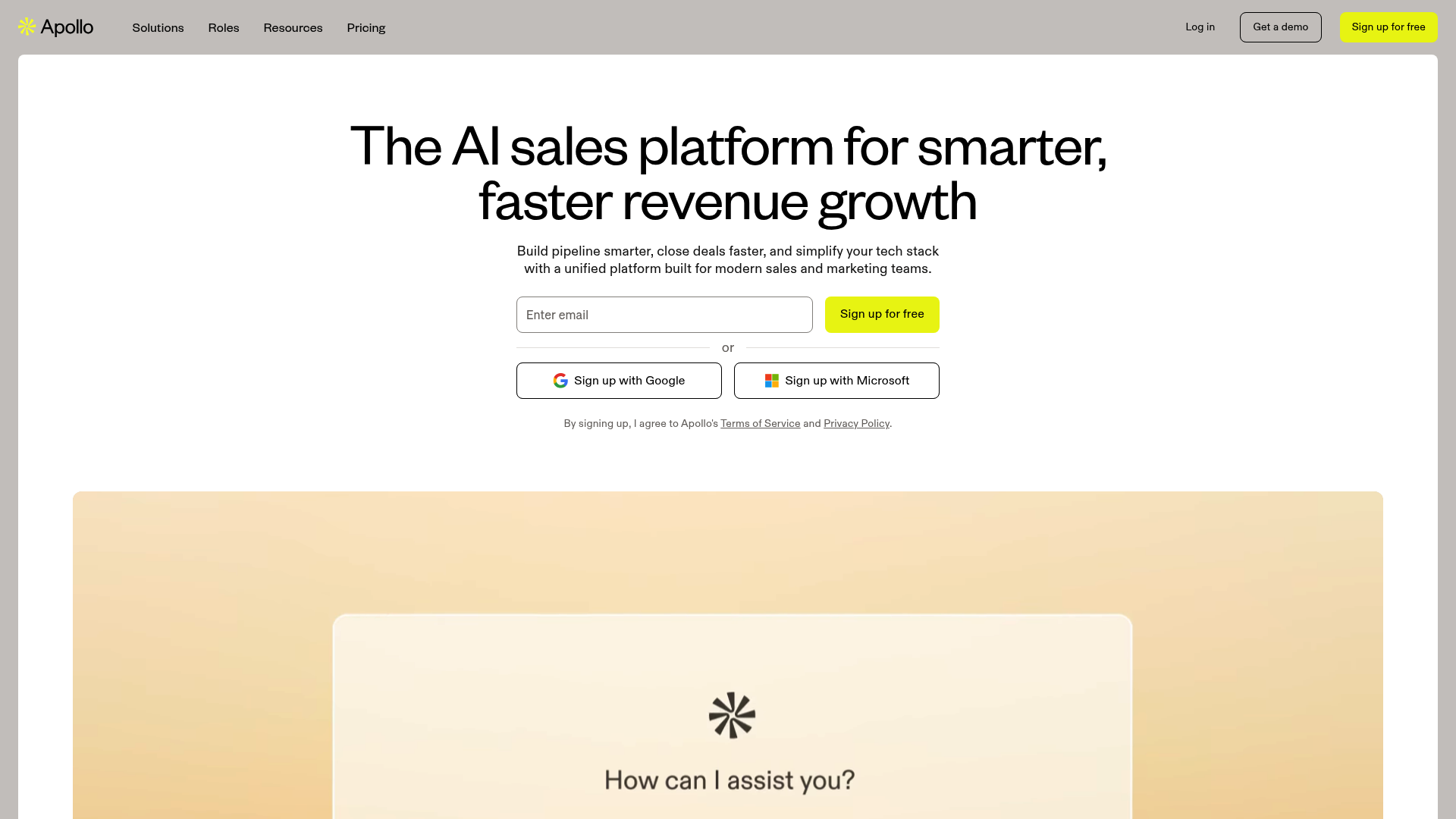
Apollo.io is a leading AI sales platform that combines data acquisition, email sequences, and CRM enrichment. With access to over 210 million contacts, it enables teams to map the entire sales funnel in one application. While the efficiency gains from AI workflows are impressive, users occasionally report challenges with data accuracy in niche markets and email deliverability. Overall, however, Apollo offers excellent value compared to competitors like ZoomInfo. Core Features of the AI Platform: Precise Lead Search and B2B Database: At the heart of Apollo is its database of over 210 million contacts and 30 million businesses. Users can apply hundreds of filters to identify ideal customer profiles (ICPs). The Chrome extension also allows users to extract contact data directly from LinkedIn profiles or company websites and instantly use it in campaigns. AI-Powered Outreach Campaigns: Apollo automates the sending of personalized multi-channel sequences. The integrated AI helps compose emails, creates summaries of sales conversations, and suggests next steps. Integrated deliverability guardrails attempt to prevent emails from ending up in the spam folder, but this requires careful configuration of your domain. Seamless CRM Integration and Enrichment: The platform offers deep integrations with Salesforce, HubSpot, and other popular CRM systems. Existing records can be automatically enriched to ensure sales teams always work with up-to-date phone numbers and email addresses. Practical Use Cases 2026: In modern sales workflows, Apollo is primarily used for hyper-personalized prospecting. A salesperson identifies a target audience, lets the AI generate personalized messages based on LinkedIn activity, and initiates a sequence that combines emails, LinkedIn messages, and phone calls. This reduces manual research effort by up to 50%.
Apollo follows a freemium model. The "Free Starter Plan" offers an easy entry point with limited credits. Professional plans often start at approximately $49 to $79 per user per month. Compared to enterprise solutions like ZoomInfo, which often require five-figure annual contracts, Apollo is significantly more accessible for small and medium-sized businesses. Users should be aware of the credit system: Exports and mobile numbers consume specific quotas, which can lead to additional costs with heavy usage. Advantages and Disadvantages: All-in-one solution (replaces up to 5 individual tools), intuitive user interface, powerful Chrome extension, cost-efficient. Disadvantages: Data quality for non-US contacts is sometimes inconsistent, complex credit system, reports of high bounce rates for unverified emails. Apollo.io vs. Competitors: Apollo vs. ZoomInfo: ZoomInfo is often considered the gold standard for data quality in the US, but is significantly more expensive. Apollo offers better integration of outreach tools directly within the platform and is the more flexible choice for agile teams. Apollo vs. HubSpot: While HubSpot is an excellent CRM, it lacks native prospecting data. Many teams use Apollo as a "data engine" to feed leads directly into HubSpot.
Apollo.io is a leading AI-powered sales intelligence platform. With over 210 million contacts, it offers solutions for lead generation and outreach automation. Positive user experiences: Fast creation of target lists. Excellent CRM integrations. Time savings through automation. Negative user experiences: Occasional data inaccuracies (bounces). Frustration with changes in the pricing model. Slow customer support for technical issues.


