

Snitcher
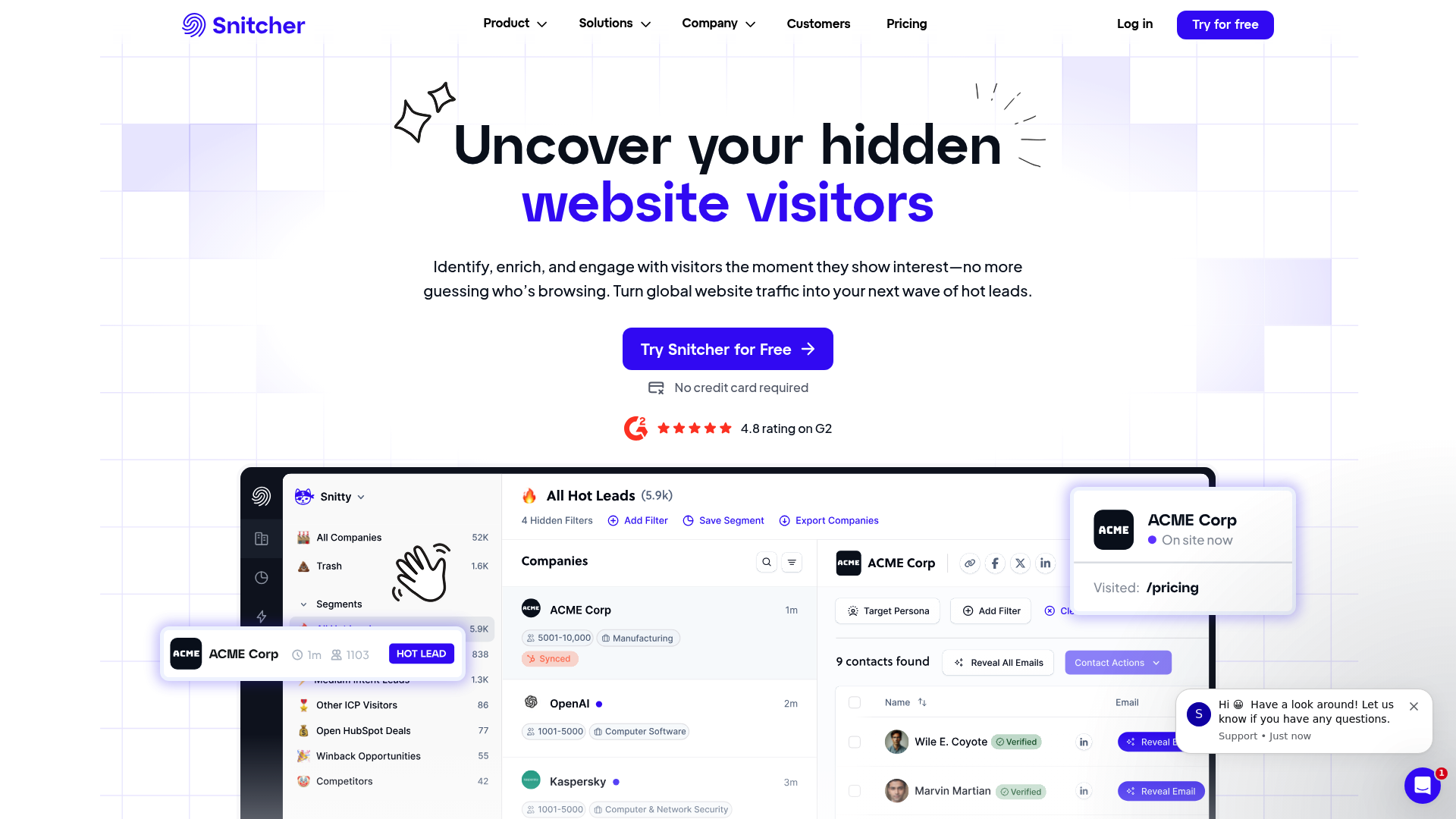
It recognizes anonymous company visitors in real time, enriches them with contacts and triggers automations – thus turning hidden website leads into revenue.
Company snapshot
- Headcount
- 17 (2026-01-01)
- Followers
- 2,083 (2026-06-19)
- HQ
- Hilversum, Netherlands
Headcount growth
Based on LinkedIn data.
Facts
- Industry
- TechnologyInformation and Internet
- Competitors
- LeadinfoLead ForensicsLeadfeeder
- Customers
- Usersnap, Waylay, FleetDM
- Employees
- 17
- Followers
- 2,083
- Review created
- Last reviewed
Snitcher Review 2026: The Ultimate Solution for B2B Visitor Identification?
Unique Selling Proposition Rating & Criticism Ideal for real-time identification of B2B companies with seamless CRM synchronization. 4.6/5 stars. Praised for usability; criticized for scalability under high traffic (FUP). Small to medium-sized B2B sales teams and marketing agencies.
Introduction & Conclusion: Is Snitcher Worth It in 2026?
Snitcher is a powerful lead generation tool that transforms anonymous website traffic into identifiable B2B leads. It solves the problem of "blind" traffic by showing which companies are showing interest. The bottom line: For SMEs, it's a highly efficient solution for increasing revenue, while enterprise users should carefully review the traffic limits. Core Features of Snitcher: Real-time Visitor Identification: Snitcher recognizes companies visiting your website the moment they land. This allows sales to immediately respond to qualified signals. Lead Scoring and Segmentation: Users can set filters to display only relevant companies (e.g., by industry or size). This prevents being overwhelmed with irrelevant data. Deep CRM Integrations: The software offers native integrations with Salesforce, HubSpot, and LinkedIn. Data flows directly into the existing workflow, minimizing manual data entry. Practical Use Cases 2026 In the current market environment, teams primarily use Snitcher for account-based marketing (ABM). When a target company visits the pricing page, the responsible account manager immediately receives a notification via Slack or CRM. Pricing & Value Analysis Compared to the Competition Snitcher starts at approximately $49 per month and offers a 14-day trial. Compared to competitors like Leadfeeder or SalesViewer, Snitcher positions itself as a user-friendly alternative with a focus on SMEs. While Lead Forensics often uses more expensive annual contracts, Snitcher remains more flexible but could reach its limits with extremely high traffic due to fair-use policies (FUP).
News & updates
Schnitzer Steel Industries has been recognized as one of the 2023 World's Most Ethical Companies, marking its ninth consecutive year on the list. This award underscores the company's dedication to ethical practices, which are integral to its operations and values, including safety and sustainability.
Company
Snitcher identifies anonymous website visitors so B2B teams can convert high-intent traffic the moment it lands. Most businesses never see 98% of their web traffic. We help teams turn it into pipeline by identifying key accounts, enriching them instantly and triggering the right actions at exactly the right moment. Companies like Clay, Unify and lemlist use Snitcher to capture revenue from high-intent traffic by using our product directly or integrating it into the GTM systems and product experiences they build. We're bootstrapped, profitable and proving you don’t need VC money to dominate a category. We move fast, ship faster and every role comes with founder-level impact. Want to 10x with us?
LinkedIn ↗