
From vibe coding to agentic engineering
A year ago, Andrej Karpathy told everyone to give in to the vibes. Millions did. They prompted their way to MVPs, weekend projects, and startup prototypes where 95% of the code came from an LLM.
Collins Dictionary named vibe coding its 2025 Word of the Year. Y Combinator reported a quarter of its Winter 2025 batch ran codebases that were almost entirely AI-generated.
Then came the hangover.
The Hangover Nobody Planned For
By September 2025, Fast Company was writing about senior engineers trapped in development hell with AI-generated code. A CodeRabbit analysis of 470 open-source GitHub pull requests found "AI-co-authored code contained roughly 1.7 times more major issues than human-written code." Lovable, a Swedish vibe coding platform, shipped 170 apps with security holes that exposed personal data to anyone who looked.
The pattern repeated everywhere: team vibe-codes a prototype, stakeholders get excited, engineers face the choice between rebuilding with proper architecture or hardening a prototype that was never meant for production. Neither is fast. Neither is cheap.
METR ran a randomised controlled trial with experienced open-source developers. The result was brutal: developers using AI coding tools were 19% slower, despite predicting they would be 24% faster and still believing afterward they had been 20% faster. The confidence gap between perceived and actual performance is the most dangerous finding in that study.
The Problem Was Never the AI
Here is where most takes on this get it wrong. The problem was not that AI generated bad code. The problem was that people skipped the engineering.
No architecture. No specifications. No tests. No review. Just prompts and prayers.
As Addy Osmani from Google Cloud put it: "AI did not cause the problem. Skipping the design thinking did."
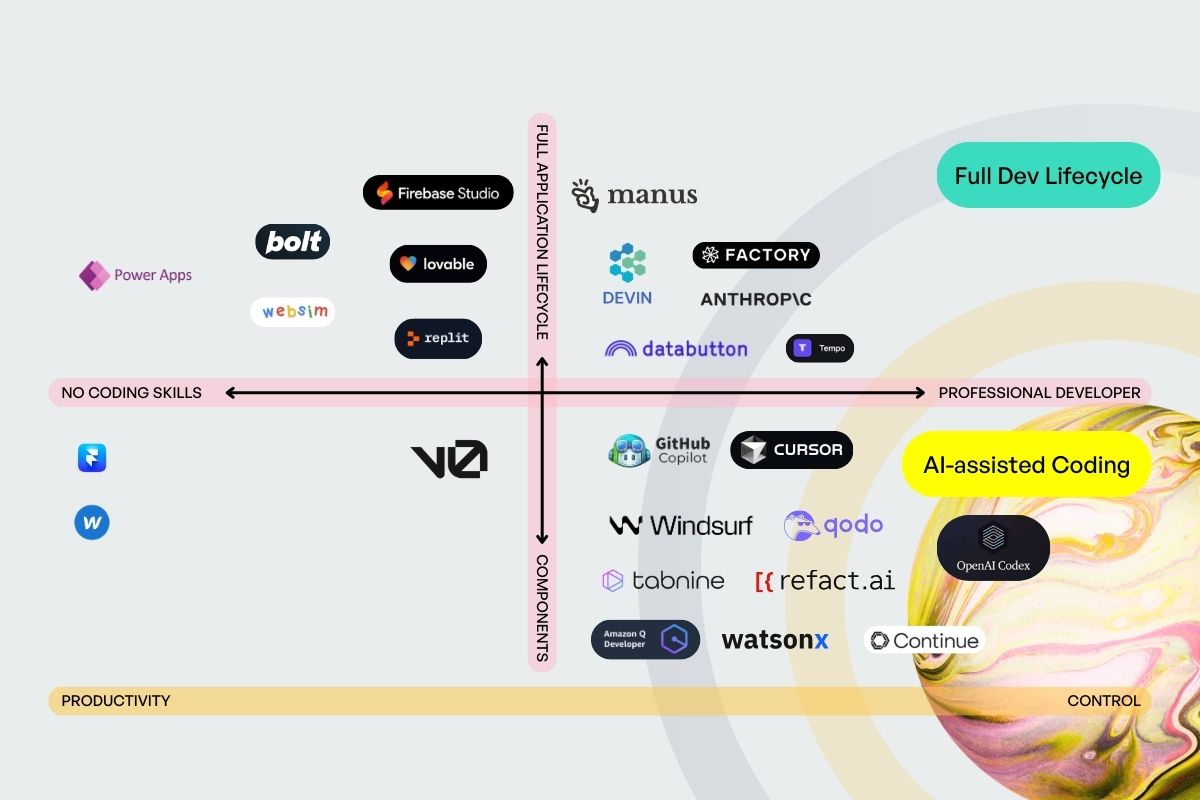
I saw this firsthand. In my February 2025 article on AI-assisted coding, I mapped the evolution from no-code to low-code to AI-assisted development. The thesis was sound. AI lets engineers focus on architecture and problem-solving rather than repetitive coding. What I underestimated was how many people would skip the engineer part entirely.
Vibe coding treated software like a conversation. Type a prompt, get an app. The vibes were great. The code was not.
Enter Agentic Engineering
On 5 February 2026, exactly one year after coining vibe coding, Karpathy posted an update. The new term: agentic engineering.
A lot of people quote tweeted this as 1 year anniversary of vibe coding. Some retrospective - I've had a Twitter account for 17 years now (omg) and I still can't predict my tweet engagement basically at all. This was a shower of thoughts throwaway tweet that I just fired off… Andrej Karpathy (@karpathy) February 4, 2026
His reasoning: agentic because developers no longer write most code directly. They orchestrate agents and act as supervisors. Engineering because the process still involves both art and science, requires expertise, and is a skill that can be learned.
This is not a rebrand. It is a fundamentally different operating model.
In vibe coding, you prompt and hope. In agentic engineering, you plan, direct, and review. The AI does the repetitive lifting. You own the architecture, the guardrails, and the outcomes.
Anthropic's 2026 Agentic Coding Trends Report describes the shift: teams no longer rely on a single coding assistant but a fleet of agents. One writes code, another generates tests, another reviews changes, another handles deployment. All under human oversight. TELUS created over 13,000 custom AI solutions while shipping engineering code 30% faster. Zapier hit 89% AI adoption across their entire organisation with 800+ agents deployed internally.
The engineers who thrive are not the fastest prompters. They are the clearest thinkers about what they are building and why.
What Actually Changed
The shift from vibe coding to agentic engineering mirrors a pattern I have seen across every tech wave for the past two decades of building software companies.
Phase one: democratisation euphoria. Everyone can do it. The barriers are gone.
Phase two: the hangover. Turns out removing barriers also removed quality controls.
Phase three: professionalisation. The tool stays. The discipline returns.
We are entering phase three right now.
Dario Amodei wrote in January 2026 that "AI models have become so proficient at coding that some of the strongest engineers he knows hand over almost all their coding work to AI." But, and this is the critical but, those are strong engineers. They know what to delegate, what to verify, and when the agent is confidently wrong.
Meta just published research on Just-in-Time Tests. AI-generated tests created on the fly for each code change because traditional test suites cannot keep pace with agentic development speed. The testing discipline did not disappear. It evolved.
Where This Leaves Product Managers and Founders
If you are building software in 2026, whether as a PM, founder, or technical leader, here is what actually matters now.
Specifications before prompts. The teams getting value from agentic engineering write design documents before they touch a coding agent. Clear specs lead to better AI output. Vague prompts lead to vague code that breaks at scale.
AI output is untrusted by default. Treat every AI-generated line of code the way you would treat a pull request from a new hire. Review it, test it, question it. Automated security scanning at every integration point is not optional.
The moat is the workflow, not the model. Intelligence is a commodity. Your product value lives in context, state management, and trust layers, not in which LLM you rent. If you take the AI away and you are left with a text box, you have built a spreadsheet with extra steps.
The role is shifting from writing to orchestrating. Product Managers using tools like Claude Code are not coding. They are investigating codebases, synthesising research, and building repeatable skills. The same shift applies to engineering: less typing, more thinking.
The Part Where I Contradict Myself
Vibe coding is not dead. And it should not be.
For personal tools, internal dashboards, prototypes that never see production, prompting your way to a working app in an afternoon is still brilliant. The software for one use case is real and valuable.
The mistake was treating a prototyping technique as a production methodology. A hackathon mindset applied to enterprise software. That is where things broke.
Agentic engineering does not kill the vibe. It puts the vibe inside a framework that actually ships.
What Comes Next
The evolution line is clear: no-code, low-code, AI-assisted coding, vibe coding, agentic engineering. Each step gave more people more power to build. Each step also created a new category of problems that only discipline could solve.
The organisations pulling ahead in 2026 are not removing engineers from the loop. They are making engineering expertise count where it matters most: architecture, security, system design. The agents handle the implementation.
The question for your team is not whether to use AI for development. That debate is over.
The question is whether you are vibing or engineering.
One of those scales. The other generates consulting invoices for the cleanup.
Serial Entrepreneur, Author
Marc is a serial entrepreneur. He started his first software company at 16. Same intersection ever since: software product management meets go-to-market. He builds the bridge: Product × GTM × AI, as one system, not three departments. When he's not building, he's out paragliding.