

Generect
Solves outdated B2B lead lists with a real-time search engine that delivers verified, immediately usable leads – faster pipeline and higher response rates.
generect.com/ ↗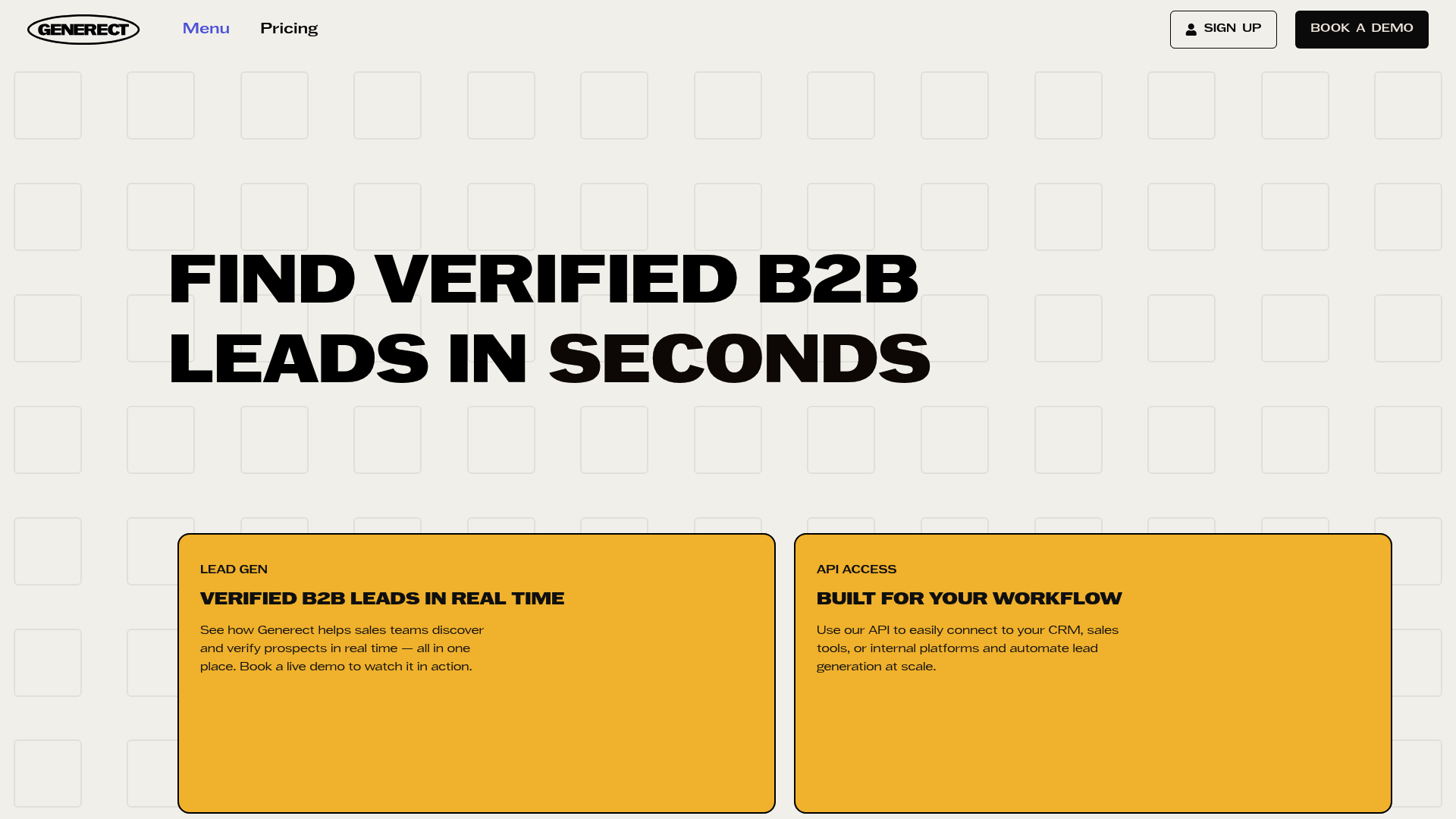
Generect Review 2026: The Revolution in Real-Time B2B Lead Generation?
- Unique Feature: Real-time Scraping & Model Context Protocol (MCP)
- Rating & Critique: 4.5/5 (Excellent data freshness, but limited third-party verifications)
- Best for: Sales teams, SDRs, and agencies that need up-to-date data instead of static lists.
Introduction & Conclusion
Generect is a modern B2B lead generation platform that differentiates itself from the competition by providing verified contact data in real time. Unlike traditional databases, which often contain outdated information, Generect relies on live scraping and AI integration via MCP. It is the ideal solution for companies that want to minimize their bounce rates and maximize the efficiency of their outbound campaigns with up-to-date company data and technological signals. The core problem: Outdated databases. The main problem in modern B2B sales is the half-life of data. Traditional providers store millions of profiles in static databases. When a decision-maker leaves the company or a company changes its tech stack, it often takes months for this information to appear in the system. This leads to high bounce rates, wasted time for Sales Development Representatives (SDRs), and a declining reputation of email servers. The solution: Real-time validation and AI workflows. Genect solves this problem with a radical approach: The tool has 'zero leads' in its own permanent database. Instead, each request is processed in real time. As soon as a user searches for a profile, the system crawls the most recent sources and instantly verifies the email address. Through the integration of the Model Context Protocol (MCP), this data can be seamlessly fed into Large Language Models (LLMs) to automate personalized outreach campaigns. Key features of Genect: Real-time contact search and email verification. The platform allows users to filter specifically by industry, role, revenue, and region. Each found email address undergoes a multi-stage validation process. According to the manufacturer, this guarantees a validity rate of up to 98% and reduces the bounce rate to a minimum (often below 2%). Model Context Protocol (MCP) Integration: A unique selling point in 2026 is the deep integration of MCP. This allows sales teams to connect Generect directly with AI agents. Data can then be processed locally or remotely to generate, for example, automated, highly personalized initial approaches based on current company signals. Sales Navigator Sync & CRM Integration: Users can import their existing filters from LinkedIn Sales Navigator directly into Generect. The collected and verified data can then be exported to common CRM systems like Salesforce, HubSpot, or Pipedrive at the touch of a button, eliminating manual data entry. Signal Tracking and Enrichment: Geneect goes beyond simple contact data. The software tracks signals such as new hires, funding rounds, or changes in a company's tech stack. These triggers enable sales teams to approach potential customers with the right argument at precisely the right time. Practical Use Cases 2026: Automated Pipeline Acceleration: A startup uses Genect to automatically generate daily lists of companies that have recently implemented new marketing software. Through API integration, these leads are immediately verified and transferred into an automated email sequence.
Event and Conference Targeting
Sales teams use the platform to enrich trade fair attendee lists with up-to-date contact information in real time. This allows appointments to be scheduled precisely and with a high success rate even before the event.
Price-Performance Ratio & Competition
Generect positions itself as a technologically advanced alternative to industry giants like Apollo.io, ZoomInfo, or Hunter.io. While Apollo impresses with its huge database, Generect scores points with the timeliness of its data and its superior AI infrastructure (MCP).
- Generect vs. Apollo: Generect offers fresher data through live scraping; Apollo has the larger historical database. Genect vs. Hunter.io: Genect offers deeper firmographics and better CRM workflows beyond simple email search. Pricing: Genect uses a usage-based model with discounts for high volume. A free trial is available to check the data quality beforehand.
Summary: Advantages and Disadvantages
Advantages
- Highest data freshness through real-time queries.
- Excellent email deliverability rates (98% validity).
- Future-proof MCP integration for AI workflows.
- No need to install browser extensions or social media links.
Disadvantages
- Real-time queries can be slightly slower than database exports with very large lists (partially compensated by caching).
- Transparency regarding data protection compliance (GDPR) needs to be examined more closely on a case-by-case basis. will be.
- Dependence on the availability of target sources during the scraping process.
Conclusion
Generect is a powerful tool for modern sales organizations that focus on quality over quantity. The combination of live data and state-of-the-art AI interfaces makes it one of the most exciting tools in sales intelligence for 2026. Companies that want to significantly increase their response rates should integrate the platform into their tech stack.
At a glance
- Industry
- Information Services
- Competitors
- ZoomInfoClearbitApollo.io
- Customers
- Sales Teams, Marketing Agencies, B2B Companies
- Employees
- 15
- Followers
- 464
News & updates
The 4 Under 40 Awards program honors young professionals making a difference in the independent aftermarket, celebrating their innovation and commitment to excellence in the field.
Company
Helping businesses find their ideal customers with validated emails. We have 0 leads in our database, meaning each request is real-time. You don't have to connect your social accounts or install extensions to scrape the data - our tool does this for you.
LinkedIn ↗