

Tavus
Problem: Digital assistants are impersonal. Solution: Tavus offers PALs – multimodal AI humans that see, hear, remember, and act. Result: Real-time interactions.
www.tavus.io/ ↗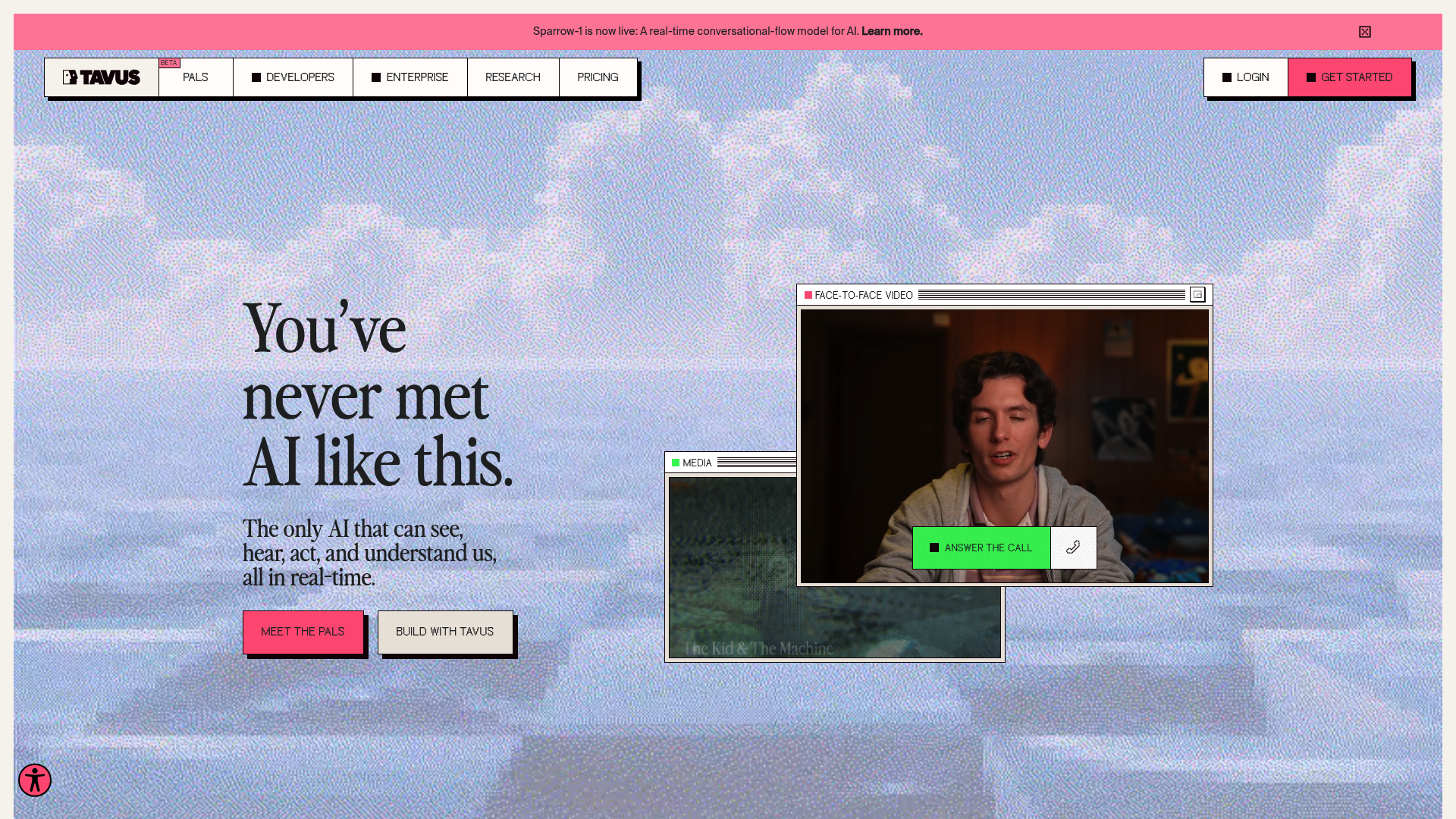
Tavus Review 2026: The AI-Human Interaction Revolution Put to the Test
A brief overview for those in a hurry: Tavus offers a platform for 'AI Humans' who can see, hear, and act in real time. With extremely low latency of under 500ms and specialized models like Sparrow-1, the company is setting new standards in digital communication. Unique Feature: Multimodal real-time AI (PALs) with memory and proactive action. Rating: 4.8/5 – Leading in latency and realism, but demanding in terms of integration. Best suited for: Customer support, personalized marketing, and AI interface developers. Introduction & The Verdict: Is Tavus the Future of Communication? Tavus has evolved from a lip-sync video tool to a leading research lab for human-computer interaction. The software solves the problem of unnatural, delayed communication with AI agents. By combining visual perception and lightning-fast speech processing, Tavus creates a bridge between humans and machines that feels almost like a real conversation. The verdict for 2026: Tavus is currently the most powerful platform for companies that want to create true digital identities.
Core AI Features: What Makes Tavus Unique
Phoenix-4: The Next Generation of Video Rendering
Phoenix-4 is the heart of the visual representation. It enables the creation of hyper-realistic avatars that adapt facial expressions and gestures to the conversational context in real time. Unlike older models, there are hardly any 'uncanny valley' effects.
Raven-1: The AI's Perception
This model allows the AI to perceive the user through the camera. Raven-1 recognizes emotions and visual cues, making the interaction significantly more personal than with purely text- or voice-based bots.
Sparrow-1: Conversation Timing in Milliseconds
The biggest hurdle for AI conversations so far has been latency. Sparrow-1 achieves a median response latency of just 55ms. This means the AI doesn't interrupt erroneously and responds immediately when the user stops speaking.
Practical Use Cases in 2026
- Personalized Sales: Automated video bots that respond to emails and book appointments directly in the calendar.
- E-Learning & Coaching: Digital tutors who monitor learners' progress and respond visually to comprehension questions. Enterprise Interfaces: Integration with Google Drive and Slack to discuss documents in real time and delegate tasks. Step-by-Step: How to get started with Tavus PALs. Account Setup: Sign up via the Tavus portal and link it to your desired data sources (e.g., G Suite). Avatar Training: Upload a short reference video to create your own digital identity. Integration: Integrate the API into your own website or use the PALs app for your daily workflow. Pricing & Competitive Analysis Tavus positions itself in the premium segment for businesses and professional developers. Compared to competitors like HeyGen or Synthesia, Tavus offers a decisive advantage: true real-time interactivity. While other tools primarily focus on creating static videos, Tavus is a platform for live interactions. The costs are higher, but reflect the technological superiority in latency.Advantages
- Market-leading latency (Sparrow-1).
- Deep integration into work environments (calendar, Drive).
- High realism through Phoenix-4 rendering.
- API complexity for smaller teams.
- High costs compared to simple video generators.
At a glance
- Industry
- Software Development
- Competitors
- Soul MachinesSynthesiaHour One
- Customers
- ACTO, Chappy.ai, Deloitte, Amazon, Alibaba Cloud, Aurio, Nesti, Final Round AI, Mercor Slovakia, The Homebase AI, HP
- Employees
- 65
- Followers
- 17,690
News & updates
Tavus is revolutionizing AI with its PAL technology, raising significant funding to enhance human-like interaction capabilities. This innovation positions Tavus as a front runner in the AI sector, focusing on emotional intelligence and realistic human interactions, and is already exploited by scores of enterprises across various industries.
Company
Tavus is a research lab pioneering human computing. We’re building AI humans: a new interface that closes the gap between us and machines, free from the friction of today’s systems. Our real-time human simulation models let machines see, hear, respond, and even look real, enabling meaningful face-to-face conversations with people. AI Humans connect and act with precision and empathy, making them capable, trusted agents. It’s the best of both worlds: the emotional intelligence of humans, with the reach and reliability of machines. They’re available 24/7, in every language, on our terms. Imagine a therapist that anyone can afford. A personal trainer that adapts to your schedule. A fleet of medical assistants that can give every patient the attention they need. Tavus: teaching machines how to be human.
LinkedIn ↗