Inbound-led Outbound: la confiance d'abord, la prise de contact ensuite
·
La guerre de tranchées entre inbound et outbound est finie, et il n'y a pas de vainqueur: les deux camps ont perdu. L'inbound-led outbound, c'est ce qui vient après le cessez-le-feu. Le camp inbound a prêché pendant des années: publie du bon contenu et les clients viendront tout seuls. C'est vrai, juste trop lent et trop imprévisible quand il te faut du pipeline ce trimestre.
Le camp outbound tenait la ligne inverse: qui attend perd, alors écris, appelle, relance. Chaque boîte de réception connaît le résultat: du volume, des templates, de l'automatisation. Et depuis que l'IA a rendu l'écriture quasi gratuite, le volume grimpe chaque jour pendant que les taux de réponse chutent. Moins le message coûte cher, plus le bruit est fort. En Europe, la loi freine de toute façon le volume à froid.
Les deux camps défendent un canal et fêtent leurs propres métriques: la portée ici, l'activité là. Tes clients s'en fichent. Ils lisent, comparent, hésitent, et à un moment ils veulent qu'on les contacte, mais quelqu'un qu'ils connaissent déjà. C'est exactement là que cette page commence: chez l'acheteur, pas chez le canal.
Je travaille comme entrepreneur software à l'intersection du produit, du GTM et de l'IA, après 25 ans de software B2B à Zurich. GTM veut dire go-to-market, c'est-à-dire le chemin que ton produit emprunte jusqu'au client. J'ai vu les deux camps de l'intérieur: des moteurs de contenu qui montaient en régime trop lentement, et des machines outbound qui brûlaient la confiance. Cette page est écrite pour les fondateurs et les responsables GTM dans les boîtes de software B2B, c'est-à-dire les gens qui construisent le chemin vers le client.
Ce que tu vas apprendre
- Pourquoi le vieux dilemme inbound ou outbound est mort, économiquement et juridiquement.
- Comment la boucle fonctionne étape par étape: publier, observer, contacter à chaud.
- De quelle fondation les deux moteurs ont besoin: un profil client idéal et une base de données partagée.
- Quels chiffres tirés des livres soutiennent la boucle et pourquoi le parcours client ne s'arrête pas à la signature.
Ce n'est pas le canal qui gagne, c'est la boucle: le contenu réchauffe, la prise de contact récolte
L'inbound-led outbound relie deux mondes qu'on oppose d'habitude. Inbound veut dire que les prospects viennent à toi parce que ton contenu les aide. Outbound veut dire que tu contactes activement des entreprises. Le lien: ton contenu réchauffe le marché, et ta prise de contact vise les gens qui ont déjà senti cette chaleur. Tu arrêtes de débattre du meilleur canal et tu construis une boucle à la place.
L'inbound-led outbound est une approche où ton contenu préchauffe le marché et où ta prise de contact personnelle vise précisément les gens qui ont déjà interagi avec ce contenu. Pour le destinataire, la prise de contact n'a rien de froid, parce qu'elle ne l'est pas.
La différence avec les approches classiques: tu n'achètes pas de listes d'adresses et tu n'écris pas à des inconnus. Mais tu n'attends pas non plus passivement que quelqu'un trouve ton formulaire de contact. Tu construis de la visibilité, tu lis les réactions et tu transformes des lecteurs en conversations. Contenu et prise de contact ne sont pas deux départements qui jouent chacun leur tour, c'est un seul moteur à deux temps. Pour les entreprises de la zone DACH, ce n'est pas qu'une affaire de goût. Là où l'emailing de masse à froid est à peine faisable juridiquement, la prise de contact à chaud basée sur une vraie interaction n'est pas seulement plus efficace, c'est le seul chemin défendable proprement.
C'est la thèse de cette page. Le reste, c'est la démonstration: de la fin de la guerre de tranchées jusqu'au chiffre qui force les deux moteurs à servir un seul parcours, en passant par la boucle et sa fondation.
Pourquoi la question inbound ou outbound est-elle morte?
Parce que les deux réponses perdent chacune de leur côté. La prise de contact de masse à froid est finie: les boîtes de réception sont pleines, les taux de réponse continuent de chuter, et en Europe la loi trace des lignes serrées. En même temps, attendre l'inbound produit rarement une croissance planifiable.
Le volet juridique n'est pas une note de bas de page. L'email à froid exige en général un consentement préalable en Allemagne et en Autriche, et la loi suisse pose aussi des limites. Si tu construis ta croissance sur des adresses achetées, tu construis sur du sable.
Et puis il y a l'IA. Elle a rendu l'écriture de messages quasi gratuite, alors chaque boîte de réception coule encore plus vite. Le calcul du destinataire est simple: moins l'envoi coûte, moins un message dit à quel point l'expéditeur est sérieux. L'attention va à ceux qui ont donné quelque chose en premier. Ce que ça veut dire pour la prise de contact, c'est le sujet de L'IA tue l'outbound: écrire est devenu bon marché, la confiance non. La réponse au vieux dilemme est dans Inbound vs outbound: les deux moteurs tournent sur une seule fondation, et ce qui compte, c'est qui les pilote.
Comment fonctionne l'inbound-led outbound, étape par étape?
En trois étapes: publie du contenu que ton client idéal peut vraiment utiliser. Observe qui s'y intéresse. Contacte exactement ces gens-là personnellement, en te référant à ce qu'ils ont lu.
Étape un: publier. Ça commence par du contenu qui traite un vrai problème de ton client idéal. Le plus efficace vient du fondateur en personne, avec de vrais chiffres et de vrais workflows, comme décrit dans founder-led content. Ce visage est le seul avantage que personne ne peut copier. Ajoute du contenu contre lequel les prospects échangent volontiers leurs coordonnées, par exemple parmi les 20 idées de lead magnets.
Étape deux: observer. Qui s'intéresse à ton contenu envoie un signal: une visite de profil, un commentaire, un guide téléchargé. Une règle empirique du terrain: un signal, c'est une supposition, cinq, c'est un schéma. Comment transformer ces signaux en système, c'est approfondi dans le hub sur le signal-based selling. Un exemple: une directrice télécharge ton guide sur les prix, visite ton profil et commente un post. Ça fait trois signaux en une semaine. Tu peux lui écrire sans avoir l'air froid: en te référant au guide et en demandant si ses calculs tiennent pour son entreprise.
Étape trois: contacter. Ce sont exactement ces gens que tu contactes, en te référant à ce qu'ils ont lu. L'ordre a fait ses preuves en pratique: le contenu d'abord, la prise de contact personnelle ensuite, la pub payante en dernier. Et un nouveau canal seulement quand le premier tourne, en règle générale après 60 jours au plus tôt.
La fondation commune: un profil client idéal, une seule vérité de données
Commence par la fondation, pas par l'outillage. Même la plus belle boucle a besoin d'une base: un profil client idéal clair et une base de données partagée. Sans ça, les deux moteurs ne produisent que du bruit. Concrètement:
- Définis ton profil client idéal, comme décrit dans Lead research et ICP. ICP veut dire ideal customer profile, c'est-à-dire le profil de ton meilleur client.
- Construis une base de données partagée pour que marketing et ventes parlent de la même personne, comme dans le guide sur la stratégie de données et le CRM.
- Fais avancer chaque contact proprement, étape par étape jusqu'à la signature, comme le montre le CRM en B2B.
- Publie régulièrement en tant que fondateur avant de passer quoi que ce soit à l'échelle.
- Contacte à chaud, en petit et à la main, avant que les outils prennent le relais.
Les erreurs typiques sont vite listées: lancer tous les canaux d'un coup. Fêter les taux d'ouverture au lieu de mesurer les réponses. Abandonner après six semaines alors que la boucle compose en trimestres. Et mettre à l'échelle du volume à froid avec l'IA, ce qui brûle exactement la confiance dont vit la boucle. Une dernière règle empirique pour la planification: prévois une couverture de pipeline nettement supérieure à ton objectif, parce que toutes les conversations chaudes ne deviennent pas des deals.
Qu'est-ce que l'IA change à l'inbound-led outbound?
L'IA a dévalué le volume à froid et rendu la boucle chaude praticable, tout simplement. N'importe qui peut écrire des messages en quelques secondes maintenant, donc le contenu d'un message compte plus que sa quantité. En même temps, les agents IA, c'est-à-dire des programmes qui exécutent des étapes de travail tout seuls, prennent en charge l'observation des signaux, la recherche et la préparation de la prise de contact.
La responsabilité reste chez un humain. Mesure les réponses, pas les taux d'ouverture, et ne laisse sortir aucun message que tu ne signerais pas toi-même. Que le travail avec ces assistants soit une tâche de leadership, c'est montré dans Du vibe coding à l'agentic engineering et L'agentic engineering dans le mid-market DACH: ça échoue rarement sur la technique, ça échoue sur le leadership et la culture. Comment traduire la boucle techniquement, c'est approfondi dans le hub sur le marketing et sales automation.
Quels chiffres soutiennent la boucle?
Le chiffre le plus important parle de patience. Pourquoi elle paie, Mark Roberge le montre dans The Science of Scaling: environ 90% des nouveaux leads d'un mois viennent de contenus vieux de plus de trois mois. La visibilité compose. Ce que tu publies aujourd'hui, tu le récoltes sur des trimestres. Pour la planification, ça veut dire: traite le contenu comme un investissement avec une phase de montée en régime, pas comme une campagne avec une date de fin. Budgète en trimestres, et mesure la boucle aux réponses et aux rendez-vous, pas à la portée.
Le deuxième chiffre concerne l'économie. Roberge cite environ $10,000 de valeur contractuelle annuelle, c'est-à-dire ce qu'un client paie par an, comme plancher pour l'outbound. En dessous, l'effort d'une prise de contact personnelle mange la marge. Les deux chiffres viennent d'un contexte SaaS américain. Traite-les comme des hypothèses à tester sur tes propres chiffres, pas comme des lois de la nature.
Pourquoi le parcours client ne commence qu'à la signature
Dans le livre SaaS Sales Method, Jacco van der Kooij remplace le funnel de vente classique par un nœud papillon: la signature est le milieu du parcours client, pas sa fin. Selon son calcul, la première année de contrat ne représente que 29% de la valeur vie d'un client. Les 71% restants viennent après, par le renouvellement et l'expansion. L'image derrière: à gauche, le côté vente se resserre comme un entonnoir, à droite, le côté client s'ouvre à nouveau, avec l'onboarding, la valeur et l'expansion. Ça crée, selon van der Kooij, une croissance qui compose au lieu de simplement s'additionner.
Pour l'inbound-led outbound, ça veut dire: les deux moteurs doivent alimenter un seul parcours, pas deux funnels séparés. Ton contenu ne réchauffe pas seulement de nouveaux acheteurs, il garde les clients existants proches. Et ta prise de contact ne s'arrête pas à la signature, elle accompagne la suite du parcours. Si tu braques la boucle uniquement sur le new business, tu optimises la plus petite partie de la valeur client.
C'est l'argument le plus fort contre la guerre de tranchées: si 71% de la valeur client arrive après la signature, aucun canal ne peut gagner tout seul. Ce qui gagne, c'est le système qui nourrit tout le parcours, avec du contenu qui réchauffe et une prise de contact qui récolte.
Un cessez-le-feu avec un système: ce qui reste
✅ Ce qui brille: la boucle colle au marché européen comme presque aucune autre approche. Elle s'appuie sur de vraies interactions au lieu de listes achetées, et elle se renforce chaque mois, parce que la visibilité compose.
❌ Ce qui ne brille pas: la boucle démarre lentement. S'il te faut du pipeline cette semaine, aucun plan de contenu ne t'aidera. Les premiers trimestres exigent de la discipline avant que les chiffres la récompensent.
⚠️ Attention: le plus grand risque, c'est de retomber dans le volume. Une fois que la boucle tourne, la tentation arrive de l'étendre à des listes froides avec l'IA. Ça brûle exactement la confiance dont vit la boucle.
La guerre de tranchées du début était depuis toujours un combat sur la mauvaise question. Ce n'est pas le canal qui gagne, c'est la boucle, et elle ne s'arrête pas à la signature. Si tu veux ce genre de notes régulièrement, abonne-toi à ma newsletter.
Ci-dessous, tu trouves tous les articles sur le sujet, chacun décrit en langage clair.
Tous les articles sur ce sujet

L'IA tue l'outbound : ce que LinkedIn peut encore sauver
L'IA rend la prise de contact à froid quasi gratuite, alors chaque boîte de réception coule. Ce qui passe encore: ta réputation, ton contexte, ton profil LinkedIn.

Inbound vs outbound marketing pour plus de ventes B2B
Attendre que les clients viennent, ou frapper aux portes toi-même? Mauvaise question. Comment les deux moteurs tournent sur une seule fondation et se renforcent.
Agentic engineering : pourquoi le mid-market DACH reste bloqué à l'étape un
Reconstruire le développement logiciel autour des assistants IA: les entreprises du mid-market échouent rarement sur la technique, elles échouent sur le leadership et la culture.

Founder-led content : ton avantage GTM impossible à copier
Personne ne répond à des inconnus. Quand les acheteurs te connaissent déjà par tes posts, les taux de réponse montent. Pourquoi ton visage est le seul avantage que personne ne peut copier.
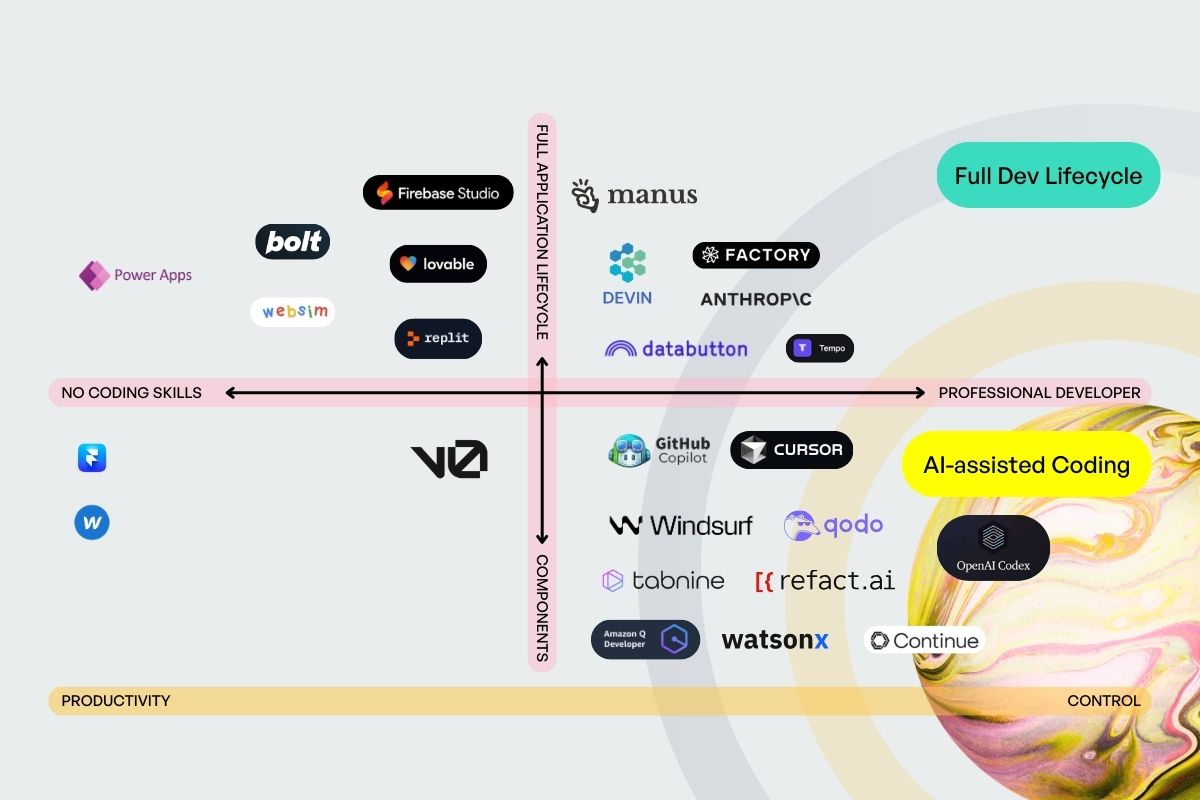
Du vibe coding à l'agentic engineering
Le coding en roue libre avec l'IA a laissé une gueule de bois: du code peu sûr, des équipes ralenties. Ce qui compte maintenant: diriger les assistants IA au lieu de leur faire confiance aveuglément.

L'alpiniste / article dans Swiss IT Reseller
Portrait dans Swiss IT Reseller: pourquoi j'ai envoyé des équipes de développeurs dans les Alpes suisses pour des sprints de travail concentrés.

Stratégie de données et CRM pour les entreprises B2B : le guide
Tout le monde dit que les données clients comptent, presque personne n'a un plan pour ça. Les trois piliers qui transforment tes données en décisions au lieu d'archives.

20 idées de lead magnets pour les entreprises B2B
20 idées de contenus contre lesquels les prospects échangent volontiers leurs coordonnées: de la checklist au calculateur.

Comment mettre en place un CRM (customer relationship management) en B2B
Sans système pour les relations clients, des contacts précieux te filent entre les doigts. Comment mener chaque contact étape par étape jusqu'à la signature.
Questions fréquentes
Qu'est-ce que l'inbound-led outbound veut dire concrètement?
Tu publies du contenu qui aide ton client idéal et tu observes qui s'y intéresse. Ces gens-là, tu les contactes personnellement, en te référant à ce qu'ils ont lu. Pour le destinataire, la prise de contact n'a rien de froid, parce qu'elle ne l'est pas.
Est-ce que l'email à froid marche encore en Europe?
Pas comme modèle de masse. En Allemagne et en Autriche, il exige en général un consentement préalable, et la loi suisse trace aussi des lignes. Le chemin viable passe par ton propre contenu, LinkedIn et des événements qui justifient une approche personnelle.
Combien de temps avant que la boucle se porte toute seule?
Pense en trimestres, pas en semaines. Le contenu a besoin de temps pour construire la confiance, et la plupart des gens abandonnent trop tôt. En échange, la boucle se renforce chaque mois, parce que la visibilité compose.
À partir de quel niveau de prix l'outbound est-il rentable?
Mark Roberge cite environ $10,000 de valeur contractuelle annuelle comme plancher dans The Science of Scaling. En dessous, l'effort d'une prise de contact personnelle mange la marge, et l'inbound plus le self-service collent mieux. Le chiffre vient d'un contexte SaaS américain, alors teste-le sur tes propres calculs.
Les clients existants ont-ils leur place dans la boucle?
Oui, sinon tu offres la plus grande partie de la valeur client. Jacco van der Kooij calcule que la première année de contrat ne représente que 29% de la valeur vie d'un client, le reste vient après la signature. Le contenu et la prise de contact personnelle travaillent donc aussi sur le renouvellement et l'expansion, pas seulement sur les nouveaux logos.