

Asana
Asana solves the challenges of unwieldy teamwork by combining tasks, goals, and AI into one platform — resulting in faster delivery and clear accountability.
Company snapshot
- Headcount
- 4,215 (2026-01-01)
- Followers
- 637,273 (2026-06-19)
- HQ
- San Francisco, CA
Headcount growth
Based on LinkedIn data.
Facts
- Pricing
- Freemium
- Industry
- Software Development
- Competitors
- Monday.comClickUpJira
- Customers
- Clear Channel Outdoor, NCAA, Fujitsu
- Employees
- 4,215
- Followers
- 637,273
- Review created
- Last reviewed
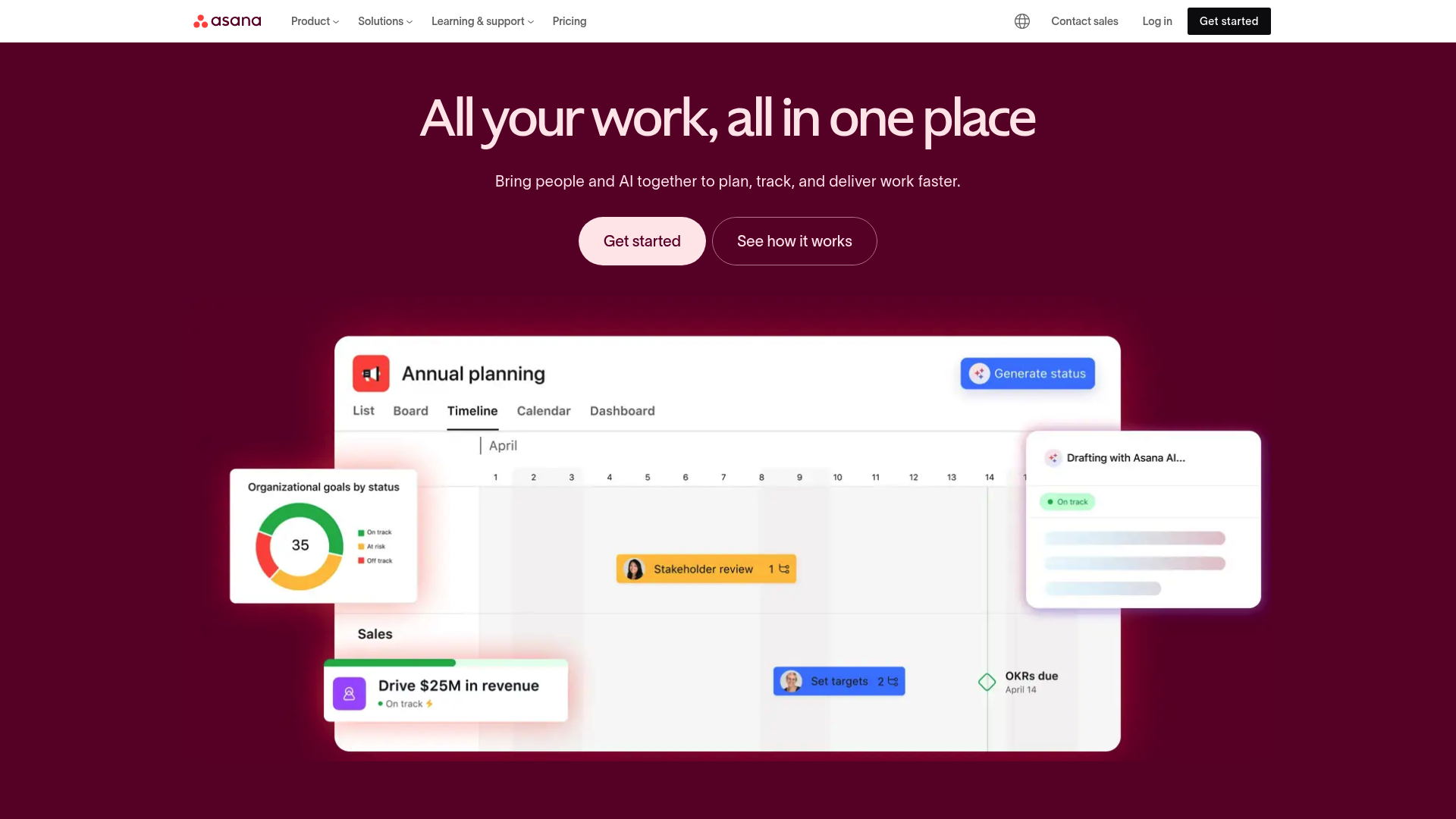
Asana Review 2026: The Ultimate Platform for Human-AI Collaboration?
Unique Feature Rating & Critique Best suited for Asana AI Studio & Smart Workflows 4.8/5 - Leader in AI integration, but steep learning curve for complex automations. Mid-sized to large companies with complex processes.
Introduction & The Verdict 2026
By 2026, Asana will have evolved from a pure task management tool to a comprehensive platform for human-AI collaboration. The software solves the problem of fragmented communication and unclear responsibilities by directly linking strategic goals to operational work. The result is significant time savings through automation and clear, real-time visibility into project progress. The main problem: The "work about work" chaos. In modern companies, teams often spend more time talking about work than actually doing it. Emails, endless meetings, and isolated spreadsheets lead to information loss and burnout. Without a central source of truth, employees lose touch with overarching company goals. The solution: Connected workflows with Asana. Asana offers a central platform for planning, tracking, and completing campaigns. By integrating over 300 tools, it breaks down data silos. The software enables the automatic capture, prioritization, and assignment of requests, freeing up teams to focus on value-added activities.
Core AI Features and Unique Selling Points
Asana AI Studio
The AI Studio is the heart of the 2026 version. It allows organizations to create their own AI agents that automate specific workflows without requiring any programming knowledge. This goes far beyond simple if-then rules.
Smart Summaries & Editor
AI-powered summaries automatically extract action items from lengthy discussions and comments. The Smart Editor helps craft responses in the right tone, professionalizing internal communication.
Smart Status & Fields
Status reports are now generated at the touch of a button by aggregating data from all subtasks using AI. Smart Fields automatically categorize tasks based on their content, drastically reducing manual data maintenance. Practical Use Cases 2026: Creative Agencies: Automation of the entire process from client request to final approval. Product Development: Linking roadmap goals with daily sprints and automated resource planning. Business Strategy: Real-time tracking of OKRs (Objectives and Key Results) across all departments. Pricing & Value Analysis Comparison: Asana offers different tiers: Starter, Advanced, Enterprise, and Enterprise+. While competitors like Monday.com or ClickUp often compete on price, Asana scores points with its scalability and deep AI integration. However, the new credit system for AI Studio requires careful budget planning for intensive use. Conclusion: Is Asana worth it in 2026? For organizations seeking a seamless connection between strategy and execution, Asana remains the gold standard. Investing in the enterprise version is particularly worthwhile for companies with the highest demands for data privacy (HIPAA, EKM) and complex automation.
Recent (last 90 days)
News & updates
Asana has been recognized by Inc. Magazine as a leading workplace for 2023, emphasizing its focus on employee wellbeing and collaborative culture. The award reflects the company's ongoing dedication to creating a supportive environment for its staff, positioning it as a hub for attracting and retaining top talent.
Company
Asana is the work management platform for human + AI collaboration. We help organizations bring people, processes, and AI together to plan, track, and deliver work with clarity and speed. Powered by the Work Graph, Asana gives teams the context and control they need to stay aligned, keep work moving, and scale impact. AI handles the busywork while humans stay in the loop to guide decisions and drive the business forward. More than 170,000 organizations — including Accenture, Amazon, Anthropic, Morningstar, and Suzuki — run their most critical work on Asana. For more information, visit www.asana.com.
LinkedIn ↗