
How to get started with AI in B2B sales

You have ten AI tools, fifty half-built workflows, and not one of them booked a meeting this week. That is where most teams are with AI in B2B sales right now. More logins, same pipeline. So the question is not which tool to buy next. The question is which skill to learn first.
Here is the uncomfortable number. Sales reps spend only 28% of their week actually selling, according to Salesforce. The rest goes to research, admin, data entry, and chasing the wrong people. AI is good at exactly that boring 72%. But only if you stop treating it like a vending machine and start treating it like a new hire.
I run Pedalix and The Science of GTM, and I have advised over 100 B2B tech companies on this. The pattern is always the same. The bottleneck is never the AI. It is the data, the signals, and the way the work is organised. This piece shows you where to begin, in plain steps, with no jargon.
What you'll learn:
- The two AI skills that pay off in B2B sales, and why everything else is a distraction.
- How to build your first AI agent this week, with three sources and one rule.
- A simple lead-research and outreach workflow you can copy, one channel at a time.
- Why the strongest signal that your automation works is that you have to switch it off.
Stop buying tools. The bottleneck was never the AI.
The real problem in B2B sales is not a missing tool. It is bad data, no clear signals, and work that nobody has organised. Add an AI tool on top of that mess and you get a faster mess. Fix the foundation first, then let agents run on it.
Look at what poor data does downstream. Fewer than half of sales leaders have high confidence in their own forecasts, Gartner found. If you cannot trust your pipeline numbers, more automation just helps you be wrong faster.
So the first move is not technical. Decide which two skills you want to own. I would pick the same two every time: deploying agents, and building distribution. One gives you a worker that never sleeps. The other makes sure the right people ever hear from you. Get those two, and the tool you use this year barely matters.
Skill 1: Build a small AI employee, not a better prompt
Most people learned to type a good prompt into a chatbot. Useful, but small. The next step is to design a little AI employee: something with context, tools, permissions, memory, a goal, and a way to check its own work before it bothers you. That is an agent. Same idea as onboarding a junior hire, just faster.
Think of it as six simple parts. Give the agent context (what it needs to know). Give it tools (what it can use, like your calendar or a search). Set permissions (what it may do alone, and where it must ask you). Give it memory (so it does not start from zero each time). Set one clear goal. And give it a way to check its own work before sending anything.
Your first agent should be boring on purpose. Build a daily briefing agent for yourself. Here is the whole thing:
- Give it three sources: your calendar, a folder of notes, and a few saved links.
- Give it one job: tell me what matters today, what decisions are waiting, and which follow-ups I owe people.
- Add one rule: show your sources, and ask before sending anything.
That one project teaches you the whole shape of every serious sales agent: context, memory, tool use, permissions, and self-checking. The mistake is trying to build an all-knowing super-agent on day one. Start with one small worker, make it genuinely useful, then add the next. This is the same logic behind running a lean team with agents: three good people plus a few reliable agents can do the work of thirty.
One more thing worth learning early: not every job needs the biggest model. Some jobs need a giant brain in the cloud. Many jobs just need a steady worker that runs cheaply and keeps your data on your own machine. You can run smaller models locally with tools like Ollama or LM Studio. You do not need this on day one. But once you feel which jobs want a giant brain and which want a quiet, reliable worker, you understand the whole game. If you want the deeper version of this shift, I wrote about moving from prompting to designing agents.
Your first lead-research workflow: Clay, then one channel at a time
The fastest win in B2B sales is to hand your lead research to an agent and add one outreach channel at a time. Start with research in Clay. Then layer LinkedIn, then email. Only go multi-channel once a single channel is working. Adding all of them at once is how people burn out and blame the tools.
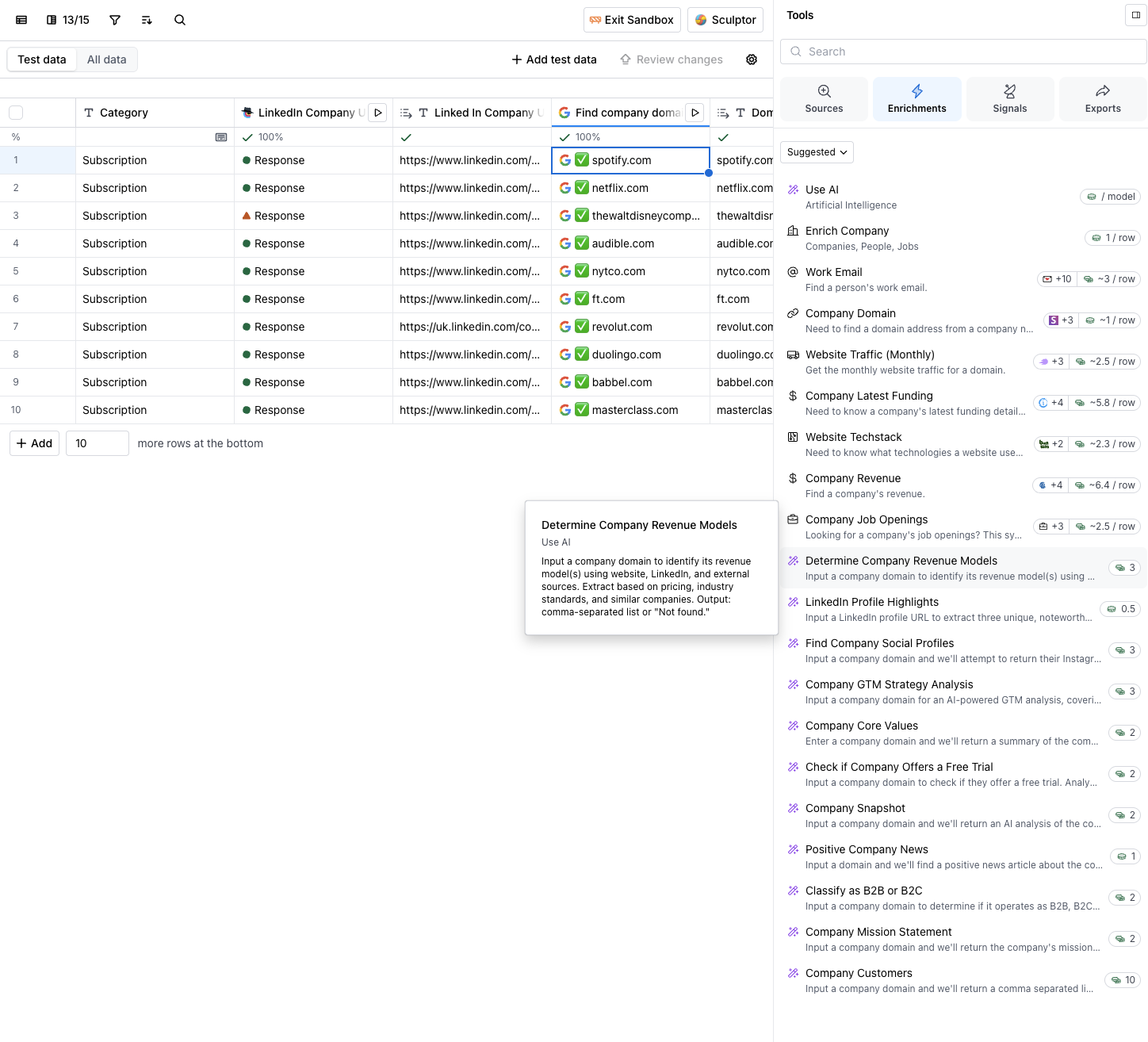
Start with research. Clay is the easiest way in. Think of it as a spreadsheet on steroids: each row is a lead or a company, and each column pulls in something useful (a job title, recent company news, a phone number, a recent post). It connects to dozens of data providers and only charges you when one actually returns the data. Then it can draft a personalised first line for each contact. This is where lead research and your ICP turn from a guess into a system. Spend your first week here and nowhere else.
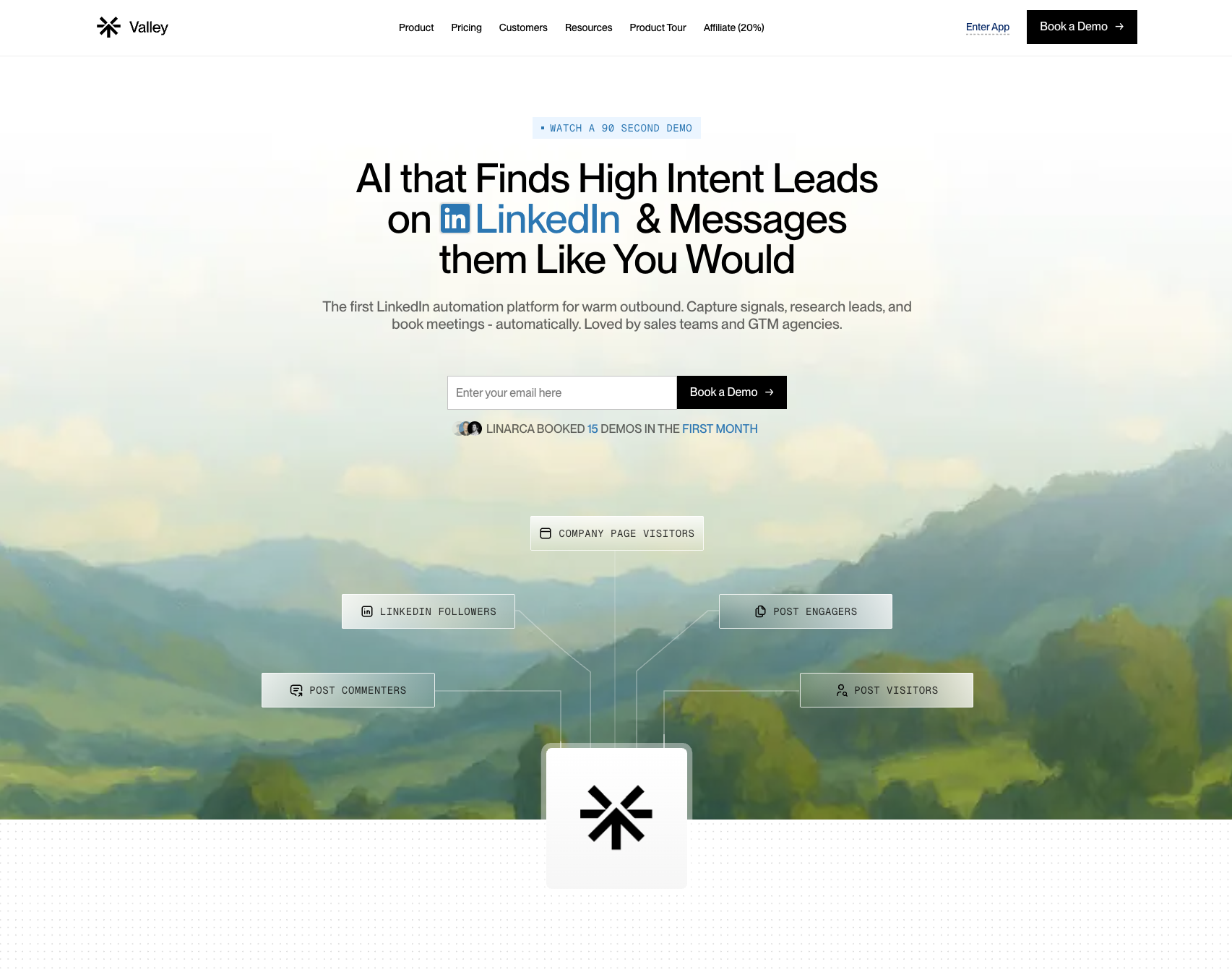
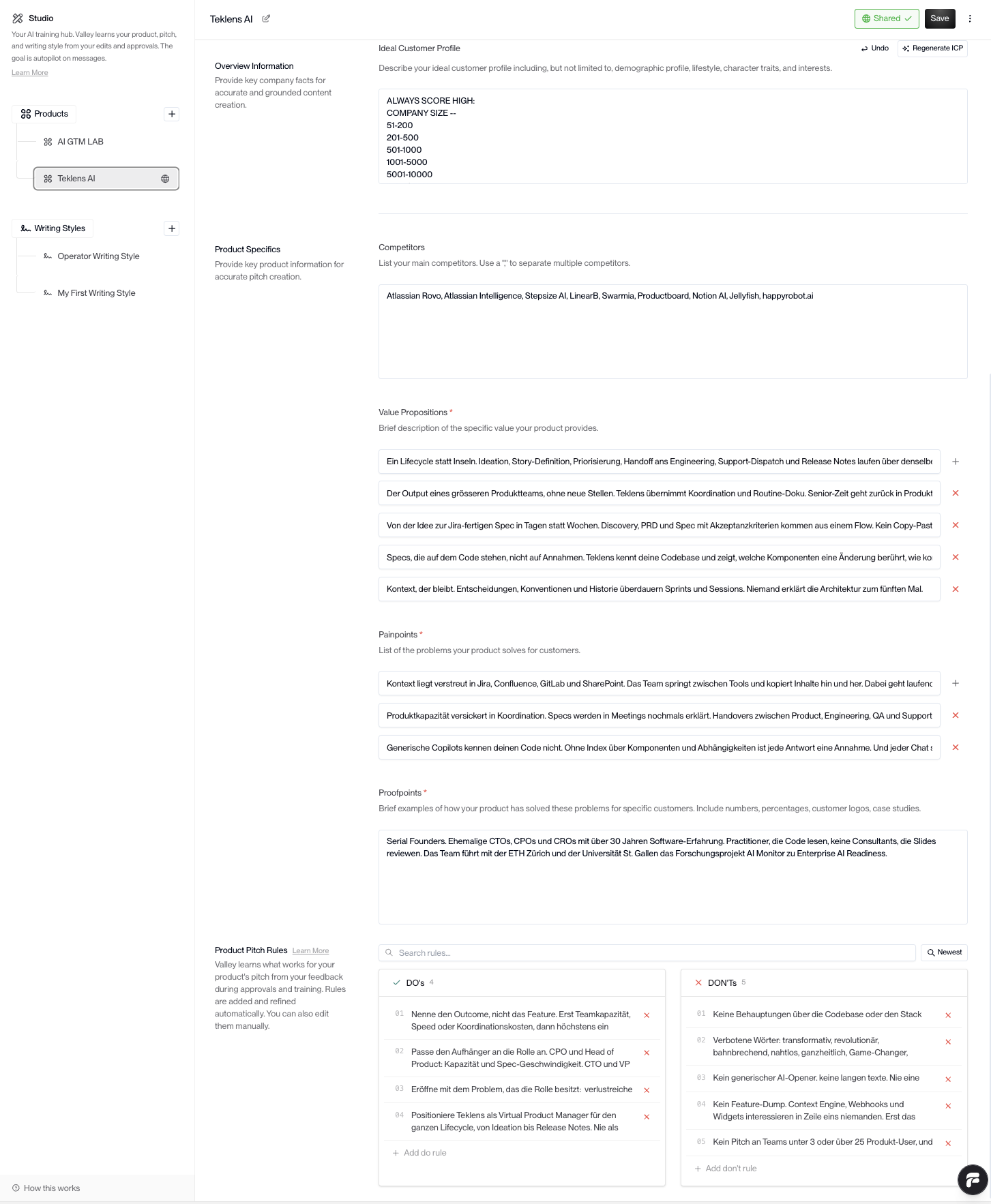
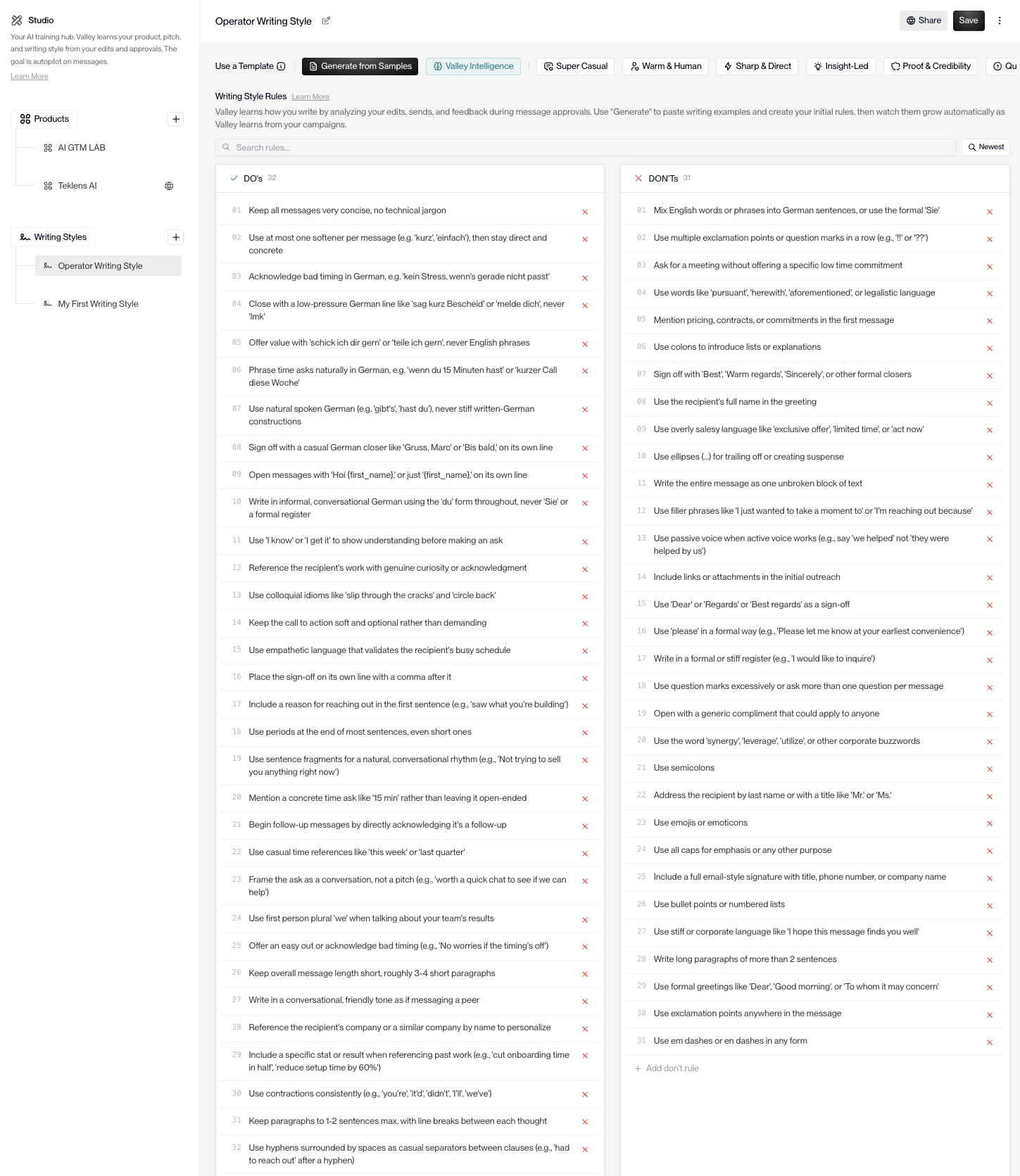
Then add one outreach channel. I would start with LinkedIn, because that is where most B2B buyers already are. A tool like joinvalley.co sends messages from your personal account, around 25 on LinkedIn and 25 by email a day, in your own writing style, only to people who fit your criteria. You feed it your dos and don'ts and your ideal customer, and the messages get shorter and less salesy over time. The honest truth about why it works so well: I had to pause mine. It booked too many meetings, and I could not keep up. That is the bar you are aiming for.
Only then go multi-channel. Once one channel works, combine email and LinkedIn so a reply on one stops the rest. Lemlist does this in one place. Or pair HeyReach for LinkedIn with Instantly for cold email. For email to land at all, buy a handful of extra domains, warm them up first, and send slowly. Keep the personalisation high: generic blasts are dead, and hyper-personalised outreach is the only kind worth sending. The order matters more than the tools: research, then one channel, then many.
Skill 2: Distribution beats posting
Distribution is not posting on social media. It is knowing where your buyers already pay attention, the exact words they use to describe their problem, and how to earn trust before you ask for anything. In an AI world, anyone can ship a product or a landing page. The rare skill is making people care.
Here is why this matters more than outbound volume. At any given moment, about 95% of B2B buyers are not in the market for what you sell, per the Ehrenberg-Bass Institute and the LinkedIn B2B Institute. Only 5% are ready to buy now. If you only chase the 5% with cold messages, you ignore the 95% who will buy later. Distribution is how you stay useful to them for months, so you are the obvious choice when they finally move.
The good marketer in this era is part researcher, part storyteller, part media operator, and part community builder. You take one insight and turn it into a post, a short video, an email angle, and a sales line. The first rep is small and you can do it this weekend. Pick one niche you care about. Then build a distribution map: write down the 20 places your buyers already spend attention (newsletters, creators, Reddit threads, podcasts, events, search terms, the tools they already pay for). Then write 20 hooks for a single idea: some about curiosity, some about fear, some about money, some about "I wish I knew this earlier". You are training yourself to start with what people already want, not with what you happen to have built. This is the long game behind founder-led content as a GTM advantage.
The real proof: when automation works, you switch it off
The clearest sign your AI setup is working is not a dashboard. It is that you have to slow it down because it books more meetings than you can take. That is what good looks like. The goal was never more activity. It was more of the right conversations.
I am not arguing this from theory. My own LinkedIn automation got paused for one reason: too many meetings. An intern running a simple email, LinkedIn, and call sequence booked five meetings a week for a CEO. And when we publish the AI Monitor study with ETH Zurich and follow up with a warm call to people who took part, the conversion to a meeting is high, because the contact is warm before we ever ask. Notice what all three have in common. AI did the research and the boring follow-up. A human did the priorities, the relationship, and the close.
That is the line that does not move. AI takes the busywork. It does not take the relationship. The reps who win are not the ones with the most tools. They are the ones who learned two skills, deploying agents and building distribution, and kept the human exactly where it counts. The full playbook for this system lives in the gtm.science framework.
Where this works, where it doesn't, and the trap
✅ What shines. Research, enrichment, first drafts, and follow-up. This is the 72% of the week reps hate. Agents do it cheaply, around the clock, and they get better as you correct them.
❌ What doesn't shine. Creativity, judgement, and trust. AI alone is not original enough to set your strategy or read a room. The priorities, the relationship, and the close stay human.
⚠️ Warning. Do not start at the top. Autonomous agent swarms look impressive and cost spiral fast without limits. And in Switzerland and the EU, some things you can build are not things you may use: call recording needs consent, and buying contact data is only legal in some places. Set boundaries and approval gates before you scale.
Remember where we started: ten tools, no meetings. The fix was never an eleventh tool. It was picking two skills and taking one small step. Build one daily-briefing agent this week. Set up one Clay workflow. Add one channel. Get good enough that you have to switch something off. That is how you actually get started with AI in B2B sales.
If you want the playbook and the workflows as they evolve, subscribe to The Science of GTM newsletter. One idea, one rep, every week.
Serial Entrepreneur, Author
Marc works at the intersection of Product × GTM × AI and builds B2B software companies with humans + agents. He started his first software company at 16 and has spent twenty years where software product management meets go-to-market. Co-founder of Teklens, the shared Product Brain for software teams. Innosuisse expert and Springer Gabler author.